검색










도서 표지 크게보기
선물하기

- - 휴대폰번호, 이메일로 선물을 전송해보세요.
- - 배송주소는 선물을 받는 분이 직접 입력합니다.
- - 쇼핑카트에서도 선물하기가 가능합니다. 추천! 모바일 선물 더보기
-
수량
-
배송비무료배송
-
출고예정일2026년 11월 26일(목) (목)
-
판매가55,000원 49,500원 [10%할인]
-
적립금
- 2,750원 적립[5%P]

-
결제혜택


-
수량
-
배송비
무료배송
-
출고예정일2026년 11월 26일(목)
※출고 예정일은 도서 재고상황에 따라 변동 될 수 있습니다.
Ph.D., University of Kentucky, Lexington, 1970
M.A., Political Science, University of Hawaii, 1967
B.A., Political Science, Seoul National University, 1964
Distinguished Professor, Korea University, Seoul, Korea, 2003-08.
Senior Advisor, 2009-present; Chairperson, 2006-09, The Advisory Committee of the Kim Dae-Jung Peace Foundation.
Ambassador Extraordinary and Plenipotentiary of the Republic of Korea (ROK) to the United States, 2000-03.
National Assemblyman, the 15th ROK National Assembly, 1996-2000.
President, the Korean Association of International Studies, 1992-93.
Academic Dean, Kyunghee University, Graduate School of Peace Studies,1986-1996.
Professor and Member of Graduate Faculty, University of Kentucky, 1975-86.
Professor, Eastern Kentucky University, 1970-75.
Reporter, Hankook Ilbo (the Korea Times), 1963-65.
Publications
Revolution and Change: A Comparative Study of the April Student Revolution of 1960 and the May Military Coup D’état of 1961 in Korea (Seoul, Korea: Korea University Press, 2015)
The North and South Korean Political Systems: A Comparative Analysis (Boulder, Colorado: Westview Press, Inc., 1994, 1999; New York and Abingdon: Routledge, Oxon, 2019)
Polemics and Foibles: Fragments on Korean Politics, Society and Beyond (Seoul, Korea: Seoul Press, 1998)
Korea and Two Regimes: Kim Il Sung and Park Chung Hee (Cambridge, Massachusetts: Schenkman Publishing Company, Inc.1981)
Editor, Democracy and Communism: Theory, Reality and the Future (Seoul, Korea: Association of the International Studies, Seoul Computer Press, 1995)
Co-author, A Journey to North Korea: 1980s North Korea as Seen by Nine Scholars from the U.S. (Berkeley, California: University of California Press, 1983)
Award and Recognition
Gwangju High School Distinguished Alumni Achievement Award, 2021
Fifty Years, Fifty Stories of the East-West Center Alumni, University of Hawaii, July 2010
Inducted into The Hall of Distinguished Alumni of the University of Kentucky, Lexington, Kentucky, April, 2010
The Republic of Korea’s Presidential Award for the 1960 April Student Revolution in 1963
[이 책은]
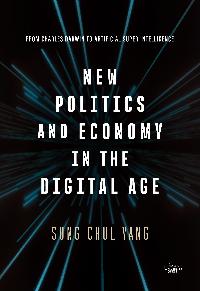
In an era of digital transformation driven by the Fourth Industrial Revolution and ultra-high-speed wireless communications, this book examines the four global existential threats to humanity’s survival and provides multifaceted political and economic insights to navigate them. The author breaks down these global challenges into world-dividers—such as the threat of Weapons of Mass Destruction (WMD) and the onset of Cold War-2—and world-unifiers, such as Climate Collapse (Global Boiling) and infectious pandemics, to dissect the core of today's global turmoil.
Divided into two parts across 14 chapters, Part One (Chapters 1–8) explores human condition amid technological progress and existential crisis. Beginning with a comparison of the worldviews of Rudyard Kipling and Rabindranath Tagore, along with insights from Darwinian evolution and human nature, it examines the emergence of "new humans"—cloned humans, Homo Electronicus, and Artificial Super Intelligence (ASI)—and the social ramifications they bring. It further critiques Karl Marx's class struggle theory and Thomas Piketty's inequality formula (r〉g), while issuing a stern warning about the Doomsday Clock through the lenses of the Fukushima nuclear disaster and climate catastrophes. Additionally, it establishes five litmus tests—term limits, freedom, time, the economic system, and the nature of mass movements—to rigorously distinguish democracy from dictatorship.
Part Two (Chapters 9–14) redefines the concepts of the state and sovereignty for the digital age and analyzes stark geopolitical rivalries. After expanding traditional qualifications of a state into cyberspace and outer space, it contrasts political and economic outcomes through two primary paired models: Korea versus North Korea, and the United States versus China. It highlights the legacies of South Korean leaders—Syngman Rhee's nation-building, Park Chung-Hee's economic development, and Kim Dae-Jung's democratization—in contrast to the tragic failures and oppressive rule of North Korea's three-generation Kim dynasty, while evaluating strategic competition (MAED) between the U.S. and China alongside major variables such as Donald Trump's second term.
This book serves as a vital guidebook, offering a clear roadmap for how humanity can safeguard liberal democracy and human dignity amid the crossroads of technological revolution, new cold war dynamics, and environmental crises.
Acknowledgements
Introduction
Part One Four Kinds of Human and Surplus Human
Chapter 1 uman Struggle for Existence: From the Border Skirmish to the Invisible Germ War
Chapter 2 Human Beliefs
Chapter 3 Human Evolution
Chapter 4 Three New Humans and Two Fictional Humans
Chapter 5 Artificial Super Intelligence and Surplus Humans
Chapter 6 Nature Rebels against Humanity in the 21st Century
Chapter 7 Live Democracy and Retrograde Dictatorship I
Chapter 8 Live Democracy and Retrograde Dictatorship II
Part Two New Politics and Economy in the Digital Age
Chapter 9 Tree of States I
Chapter 10 Tree of States II
Chapter 11 The Republic of Korea and North Korea
Chapter 12 Korea’s Authoritarian Era and Kim Dae‒Jung’s Resistance
Chapter 13 US Response to China’s Challenge I
Chapter 14 US Response to China’s Challenge II Summary and Conclusion
Notes
Index








;)
;)